
Yes, you can improve car audio without replacing factory speakers by focusing on strategic upgrades and adjustments. Enhancing amplification, adding sound deadening, and properly tuning your system can significantly improve clarity, volume, and overall audio balance. These improvements allow drivers to enjoy a more satisfying sound experience while keeping their original speakers intact.
Many people assume that speaker replacement is the only way to improve audio quality. In reality, factory speakers are often capable of delivering excellent sound when paired with proper system enhancements. This means you can maximize performance without spending time or money on a complete speaker swap.
Why Factory Speakers Are Not Always the Problem
Factory speakers are designed to meet general standards, balancing durability, cost, and reasonable sound quality. While they may not match the performance of high-end aftermarket speakers, they are rarely the sole reason for poor audio.
Several factors influence sound quality beyond the speakers themselves:
- Head unit limitations: Factory units may not deliver enough power or control over frequency ranges.
- Wiring constraints: Thin wires or poor connectors can reduce signal strength.
- Vehicle acoustics: Panel vibrations, road noise, and cabin shape can affect clarity and bass response.
Understanding these limitations is essential. A system-wide approach that addresses amplification, signal quality, and vibration can produce major improvements even with the original speakers.
Key Methods to Improve Audio Without Replacing Speakers
Upgrade Your Amplifier
One of the most effective ways to boost audio performance is to add or upgrade your amplifier. Factory head units often struggle to deliver enough power to drive speakers at optimal levels. This can result in weak bass, distortion at high volumes, and an overall lack of clarity.
A dedicated amplifier provides clean power, giving factory speakers more control over sound. Depending on your setup, multi-channel amplifiers allow you to target specific speaker groups, such as front and rear doors or subwoofers, ensuring balanced performance throughout the cabin.
Amplifiers come in different configurations and power ratings. For drivers looking to improve audio without replacing speakers, even a moderately powered amp can make a noticeable difference. This is often the most cost-effective first step in upgrading a factory system.
Add Sound Deadening Materials
Sound deadening is one of the most underrated ways to improve audio performance. By reducing vibrations and minimizing road and engine noise, deadening materials allow speakers to produce cleaner, more accurate sound.
Common materials include butyl mats, foam sheets, and multi-layer combinations applied to doors, floors, and panels.
Comparison Table: Sound Deadening Materials
| Material Type | Installation Complexity | Noise Reduction Effectiveness |
| Butyl mats | Medium | High |
| Foam sheets | Easy | Medium |
| Combination layers | High | Very High |
During a recent installation assessment for a Dallas, TX driver, adding deadening to the doors and rear panels noticeably enhanced clarity and bass response. Without changing a single speaker, the cabin sounded fuller, and even subtle musical details became more audible.
Sound deadening also prevents panels from rattling at higher volumes, dramatically improving listening comfort. Even small additions in critical areas can yield measurable results, making it a highly cost-effective upgrade.
Optimize Your Head Unit Settings
Most factory head units have limited equalization and crossover controls. Adjusting treble, midrange, and bass levels, along with fader and balance settings, can improve clarity and frequency distribution.
Digital signal processing (DSP) offers another powerful option. A DSP module can correct frequency imbalances caused by vehicle acoustics, improving stereo imaging, reducing distortion, and maximizing speaker performance.
Tuning the head unit and integrating DSP do not require changing speakers, yet they can transform the listening experience. During a tuning session in Dallas, TX, a technician was able to produce a fuller, richer sound by adjusting the crossover points and applying minor time alignment corrections, resulting in a performance that rivaled some aftermarket setups.
Line Output Converters
Line output converters (LOCs) are devices that allow factory speaker signals to interface with aftermarket amplifiers. They safely boost audio signals without overloading speakers, producing a cleaner sound with improved volume control.
Comparison Table: Line Output Converters
| LOC Type | Installation Complexity | Sound Gain Effect |
| Passive | Easy | Moderate |
| Active | Medium | High |
| Adjustable DSP | High | Very High |
LOCs are especially helpful for drivers who want to integrate an amplifier while retaining factory speakers. They allow the system to reach its full potential without requiring major modifications. Many car owners in Dallas TX have successfully used LOCs to achieve balanced sound with better depth and clarity in both front and rear speakers.
Wiring and Connector Upgrades
Signal quality can be affected by factory wiring and connectors. Thin gauge wires or corroded connections create resistance, limiting power and introducing distortion. Upgrading to higher-gauge wires and secure connectors can significantly improve signal delivery.
Top 5 Wiring Improvements for Factory Speaker Systems
- Replace old or corroded connectors
- Upgrade speaker wires to a lower-resistance gauge
- Ensure solid grounding connections
- Minimize unnecessary wire lengths
- Secure wires to prevent vibration damage
In one Dallas, TX installation, improving the wiring alone produced audible improvements in clarity and volume. This demonstrates that even subtle system adjustments can have a major impact on the listening experience.
Applying This to Solve the Problem
For car owners looking to improve audio without replacing speakers, the following steps are recommended:
- Assess Your Current System: Identify areas of weakness, such as low bass, muddled mids, or distortion at high volumes.
- Select Upgrades: Choose cost-effective options that provide noticeable improvements, such as sound deadening, wiring, or amplifier upgrades.
- Install in Order of Impact: Start with high-return improvements like amplification and deadening, then move to LOCs and tuning adjustments.
- Fine-Tune Settings: Use EQ and DSP adjustments to balance frequencies, optimize stereo imaging, and improve clarity.
- Evaluate and Adjust: Listen critically and make small changes until the system meets your preferences.
By taking this structured approach, drivers can maximize the potential of their factory speakers while avoiding unnecessary replacements or expenses. Many enthusiasts in Dallas, TX, car audio communities report achieving dramatic improvements by focusing on optimization first.
Common Misconceptions About Improving Car Audio
Myth: Factory speakers can never sound good.
In reality, factory speakers can deliver excellent performance when paired with appropriate system enhancements. Amplifiers, sound deadening, DSP tuning, and wiring improvements often produce results that rival aftermarket speakers.
The key is to focus on the system as a whole. Optimizing power delivery, reducing cabin vibration, and refining signal quality often produce the majority of improvements, while speaker replacement delivers incremental benefits only in extreme cases.
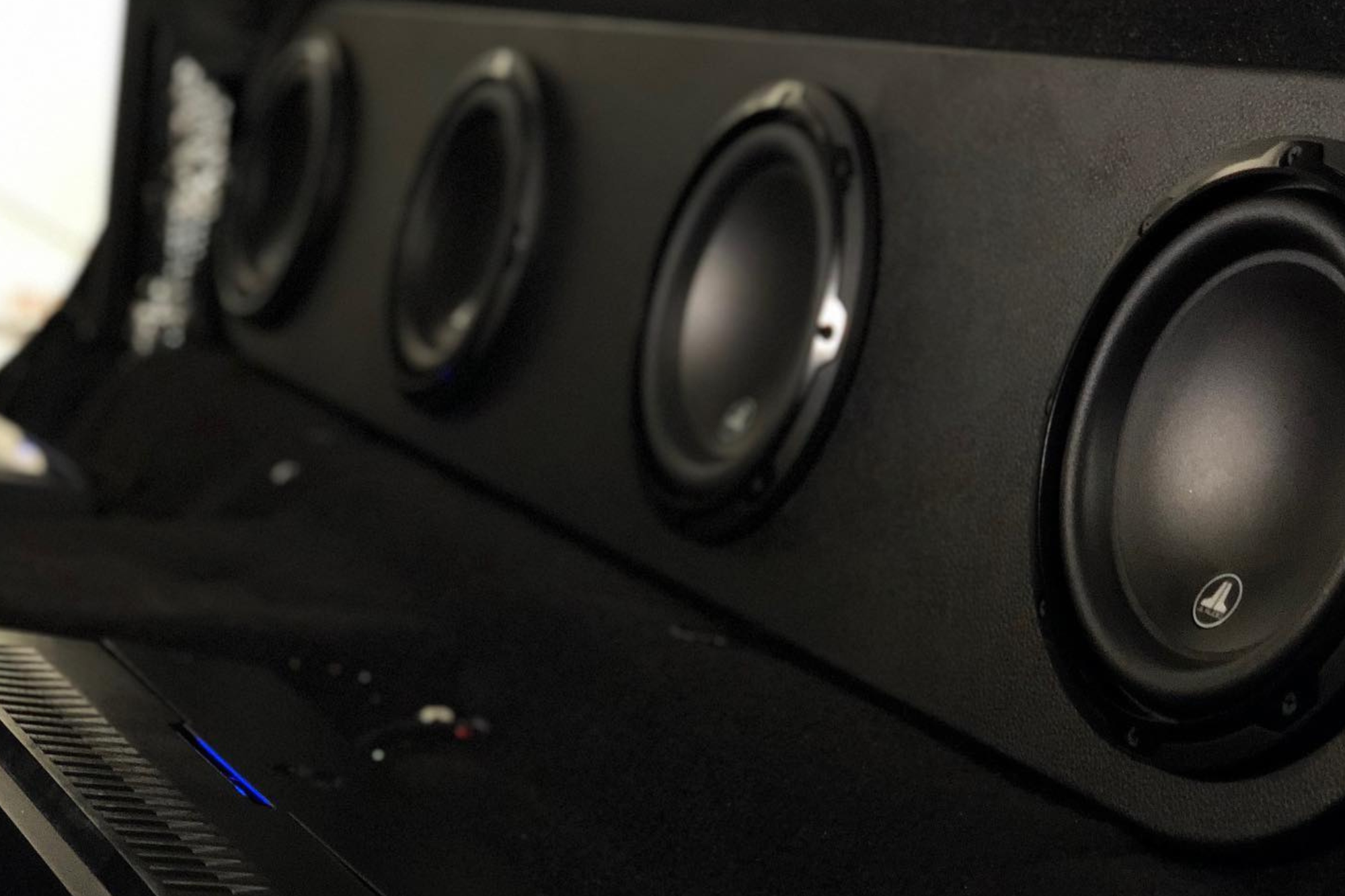
Cost vs. Performance: What Works Best Without Replacing Speakers
Not all upgrades provide the same impact for the cost. Some changes, like head-unit tuning or minor deadening, yield high returns with low effort. Others, such as amplifiers or LOCs, are more involved but offer substantial improvements.
5 Upgrade Paths Ranked by Cost-Effectiveness
- Head unit tuning and equalizer adjustments
- Sound-deadening installation
- Wiring and connector improvements
- Line output converters
- Amplifier upgrades
Comparison Table: Upgrade Methods vs Sound Improvement
| Upgrade Method | Estimated Cost | Sound Improvement Impact |
| Head unit tuning | Low | Medium |
| Sound deadening | Medium | High |
| Wiring upgrades | Low-Medium | Medium |
| Line output converter | Medium | High |
| Amplifier upgrade | Medium-High | Very High |
For those exploring car audio in Dallas, TX, prioritizing cost-effective strategies first allows noticeable improvements without spending excessively or replacing speakers unnecessarily.
When You Might Still Consider Speaker Replacement
There are situations where replacing factory speakers may be necessary:
- Speakers are physically damaged or degraded
- Distortion persists even after upgrades
- Desired sound quality exceeds the inherent capability of stock speakers
For most users, however, careful optimization of amplification, wiring, deadening, and tuning delivers more than sufficient improvement.
In Summary
Improving car audio in Dallas without replacing factory speakers is entirely achievable through strategic upgrades and careful tuning. Amplifiers, sound deadening, DSP optimization, line output converters, and wiring enhancements can collectively transform your listening experience.
At J’s Tint & Car Audio, drivers exploring car audio can use these techniques to enjoy clearer, louder, and more balanced sound while keeping their factory speakers intact. By approaching system improvements methodically, car owners can achieve professional-quality audio without the expense or effort of replacing all the speakers.
Ready to upgrade your vehicle’s audio? Contact us today to schedule your installation and experience superior sound quality!
People Also Ask
Q: Can I get better bass without changing speakers?
A: Yes, amplifiers, sound deadening, and tuning can significantly enhance bass performance with factory speakers.
Q: Is adding an amplifier worth it for stock speakers?
A: Absolutely. A dedicated amplifier can drive factory speakers more efficiently, producing clearer sound and reducing distortion.
Q: Will wiring upgrades improve audio quality?
A: Upgrading wires and connectors reduces resistance and ensures better signal delivery, resulting in noticeable improvements in clarity and volume.
Q: Do I need a line output converter for stock speakers?
A: LOCs allow factory speakers to work effectively with aftermarket amplifiers, improving overall system performance without replacing speakers.
Q: How much improvement can I expect without replacing speakers?
A: With the right combination of upgrades and tuning, you can achieve significantly clearer, louder, and more balanced sound, often comparable to systems with upgraded speakers.
For drivers interested in Dallas, TX car audio, focusing on system optimization rather than replacement provides the most efficient and effective way to enhance sound quality.